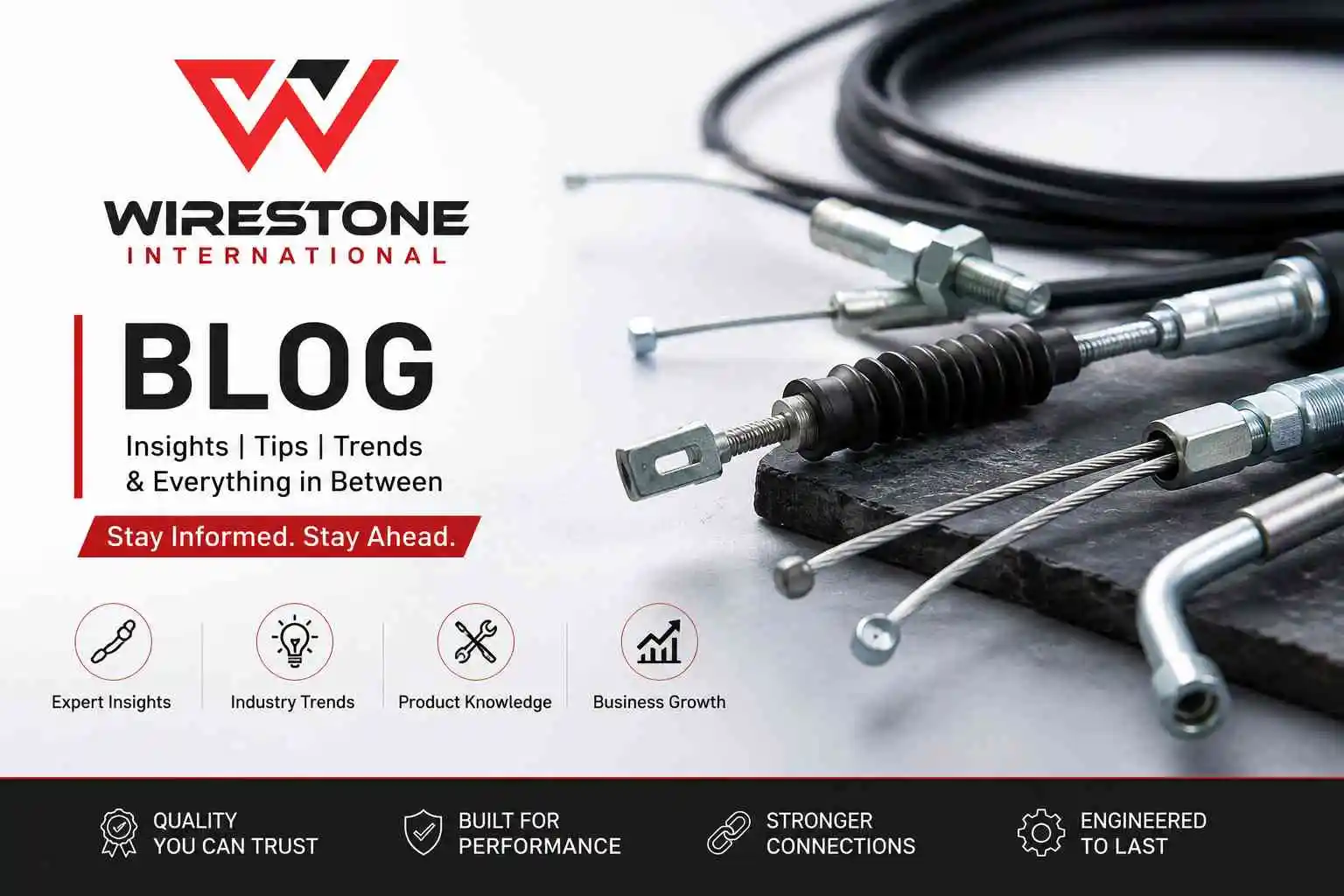
Maintaining Your Vehicle's Cables: Tips and Best Practices
Your vehicle's control cables may not always be visible, but they are essential for safe and smooth operation. From clutch and brake cables to accelerator and speedometer cables, these components ensure precise control over your motorcycle or scooter. Proper maintenance not only extends the life of your cables but also improves vehicle performance and reduces the risk of unexpected failures.
In this guide, we'll share practical tips and best practices to help you maintain your vehicle's cables and keep your ride in top condition.
Why Cable Maintenance Is Important
Control cables are constantly exposed to dust, moisture, heat, and continuous movement. Over time, these conditions can lead to increased friction, rust, stretching, and wear.
Regular maintenance helps you:
- Ensure smooth clutch and throttle operation
- Improve braking response
- Prevent sudden cable failure
- Extend cable lifespan
- Reduce repair and replacement costs
- Improve overall riding safety
Types of Vehicle Cables That Require Maintenance
The most commonly used control cables include:
- Clutch Cable
- Front Brake Cable
- Rear Brake Cable
- Accelerator (Throttle) Cable
- Choke Cable
- Speedometer Cable
- Seat Lock Cable
- Gear Shift Cable
Each cable should be inspected regularly for wear and proper operation.
1. Inspect Cables Regularly
Visual inspections are the easiest way to identify problems before they become serious.
Look for:
- Frayed wire strands
- Rust or corrosion
- Cracked outer casing
- Loose cable ends
- Sharp bends
- Excessive cable stretch
If any of these signs appear, replace the cable immediately.
2. Keep Cables Clean
Dust, mud, and moisture increase friction inside the cable housing.
Best practices:
- Wipe exposed cable sections regularly.
- Remove dirt around cable ends.
- Avoid pressure washing directly onto cable joints.
- Keep water away from open cable ends whenever possible.
3. Lubricate When Recommended
Lubrication helps reduce friction and ensures smoother cable movement.
Use:
- Motorcycle cable lubricant
- Light machine oil (only if recommended)
Avoid:
- Thick grease
- Dirty oils
- Incorrect lubricants that attract dust
Note: Some modern sealed cables are designed to operate without lubrication. Always follow the manufacturer's recommendations.
4. Check Cable Free Play
Incorrect cable adjustment can affect vehicle performance.
Too much free play may cause:
- Poor clutch engagement
- Delayed throttle response
- Reduced braking efficiency
Too little free play can:
- Increase cable tension
- Accelerate wear
- Damage clutch components
Always adjust according to your vehicle's service manual.
5. Avoid Sharp Cable Bends
Improper cable routing increases friction and shortens cable life.
During installation:
- Follow the original cable path.
- Avoid tight bends.
- Ensure the cable moves freely with handlebar movement.
- Prevent contact with hot engine parts.
6. Protect Against Rust
Moisture is one of the biggest causes of cable failure.
To prevent corrosion:
- Store your vehicle in a dry place.
- Dry cables after riding in heavy rain.
- Inspect cables during the monsoon season.
- Replace damaged outer casings promptly.
7. Replace Worn Cables on Time
Even well-maintained cables eventually wear out.
Replace a cable if you notice:
- Hard clutch operation
- Sticky throttle
- Delayed braking
- Speedometer needle jumping
- Visible rust
- Broken strands
- Cracked casing
- Unusual noises during operation
Replacing a cable before it fails helps avoid roadside breakdowns.
Benefits of Using High-Quality Cables
Premium-quality cables offer:
- Smooth operation
- Better durability
- Accurate fitment
- Corrosion resistance
- Longer service life
- Lower maintenance requirements
Choosing OEM-quality cables ensures reliable performance in all riding conditions.
Why Choose Wirestone Cables?
Wirestone manufactures high-quality automotive control cables using premium raw materials and advanced manufacturing processes.
Wirestone Advantages
- OEM-quality manufacturing
- High tensile steel inner wire
- Durable PVC outer casing
- Precision-engineered cable ends
- Excellent corrosion resistance
- Long-lasting performance
- Suitable for motorcycles, scooters, and commercial vehicles
Explore Wirestone Products
Frequently Asked Questions
How often should I inspect my vehicle's cables?
Inspect them every 3,000–5,000 km or during every scheduled service.
Can cable maintenance improve vehicle performance?
Yes. Properly maintained cables provide smoother clutch operation, better throttle response, and improved braking.
Should I lubricate every cable?
No. Some sealed cables are maintenance-free. Always follow the manufacturer's recommendations.
When should I replace a control cable?
Replace it immediately if you notice fraying, rust, cracks, stiffness, excessive free play, or poor performance.
Conclusion
Maintaining your vehicle's cables is one of the simplest and most cost-effective ways to improve safety, reliability, and riding comfort. Regular inspections, proper cleaning, correct adjustment, and timely replacement help prevent unexpected failures and keep your motorcycle or scooter performing at its best.
For long-lasting performance and dependable quality, choose Wirestone OEM-quality control cables designed to meet the demands of everyday riding.