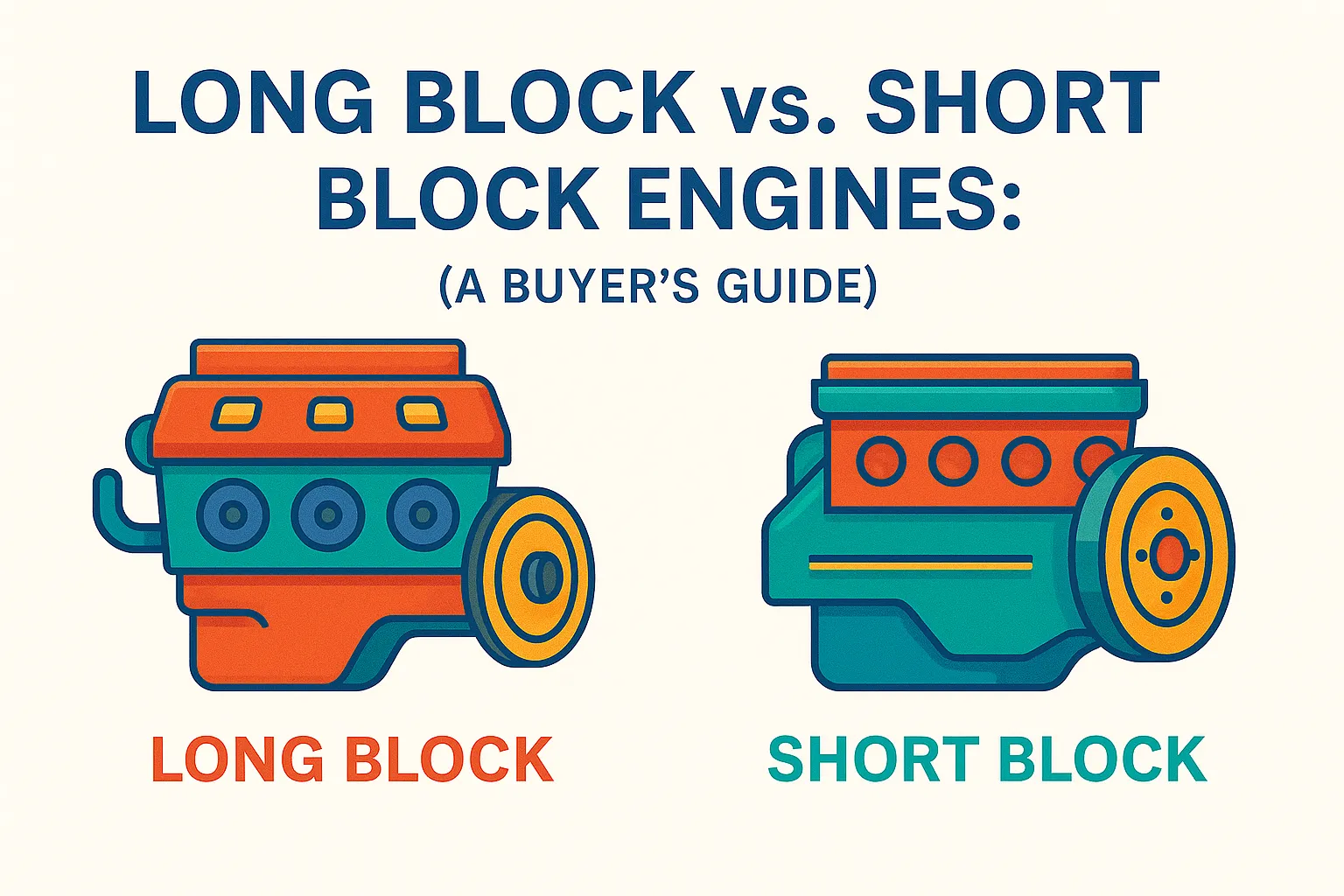
Long Block vs. Short Block Engines: What’s the Difference? (Simple Guide)
When an engine needs major repair, mechanics often suggest replacing it with either a short block or a long block engine.
But what do these terms actually mean?
And which one should you choose?
Here’s a simple explanation to help you understand the difference.
What Is a Short Block Engine?
A short block is the lower half of the engine, containing the essential rotating parts.
A short block includes:
-
Engine block
-
Crankshaft
-
Connecting rods
-
Pistons & rings
-
Bearings
-
Oil passages
What it does NOT include:
✘ Cylinder head
✘ Valvetrain (cams, valves)
✘ Intake & exhaust components
✘ Fuel system
✘ Sensors & wiring
Best for:
A short block gives you the bottom end — you reuse the rest.
What Is a Long Block Engine?
A long block is a more complete engine assembly.
It includes everything in a short block plus the entire top-end.
A long block includes:
✔ Cylinder head(s)
✔ Camshaft(s)
✔ Valves, springs, seals
✔ Timing chain/belt (in most cases)
✔ Rocker arms
✔ Head gasket
✔ Short block components
Does NOT include:
✘ Intake manifold
✘ Exhaust manifold
✘ Alternator
✘ Fuel injectors
✘ Sensors (varies)
Best for:
A long block is almost a full engine minus accessories.
Key Differences: Short Block vs. Long Block
| Feature | Short Block | Long Block |
|---|
| Includes Block + Rotating Assembly | ✔ | ✔ |
| Includes Cylinder Head | ✘ | ✔ |
| Includes Valvetrain | ✘ | ✔ |
| Ready to Run | ❌ Needs assembly | ✔ Nearly complete |
| Cost | Lower | Higher |
| Labor Time | High (more assembly) | Low |
| Best For | Internal damage only | Major failures |
Short Block → More work, cheaper
Long Block → Less work, more complete
Which One Should You Choose?
Choose a Short Block if:
-
Your cylinder head is still in good condition
-
You want a more affordable rebuild
-
Only internal rotating parts failed
Choose a Long Block if:
-
Your engine overheated severely
-
Cylinder head is cracked or warped
-
You want a quicker, more reliable replacement
-
The engine has high mileage
Long blocks generally last longer because more components are brand new.
The Role of Sensors, Wiring & Assembly Quality
Modern engines rely heavily on sensors for fuel, ignition, and emissions control.
During engine replacements, mechanics must reconnect:
Loose or corroded connectors can cause:
⚠ Misfires
⚠ Rough idle
⚠ Check engine lights
⚠ Failed engine start
Workshops often replace weak or broken connectors with durable ones from WirestoneAuto.com to ensure a reliable installation.
A new engine can run poorly if wiring and sensor connections are not perfect.
Final Thoughts
Both long block and short block engines solve major engine problems — but each serves a different purpose.
Quick Summary:
✔ Short Block = Only bottom-end components
✔ Long Block = Short block + complete top-end
✔ Short block = cheaper but requires more labor
✔ Long block = faster, more reliable fix
✔ Choose based on damage severity & budget
✔ Proper wiring and sensor connection is essential
Knowing the difference helps you make the right decision when faced with engine failure.